
“Chasing the Legacy of the ‘Chinatown Old Left’ of San Francisco”
The Chinatown Old Left also known as the ‘‘Chinese Marxist Left,’ the term coined by H. Mark Lai (the “dean of Chinese American history”). Mark Lai was a bilingual Chinese American, who not only was a participant and activist, began documentation of Chinese progressives during the 30’s/40’s/50’s encompassing three groupings: intellectuals, labor activists and small businessmen. The majority of whom were not necessarily Marxist in ideology, but were definitely progressive, left leaning, concerned Overseas Chinese.
Attention will be centered around individuals who emerged from the Chinese American Democratic Youth League (民青 — Mun Ching in Cantonese / Minqing in Mandarin) — a literary and cultural group that supported the Communist Party of China’s determined War of Resistance to Japanese imperialist occupation, and later waged the Chinese civil war led by the revolutionary movement headed by Mao Tsetung.1 These groups — the intellectuals, labor activists and small business people — enjoyed mutual intersections and came under intensive McCarthy-era government harassment; and many suffered mental breakdowns, suicides, deportations, and loss of citizenship. Some of their stories are captured and highlighted in the 2001 video documentary, “The Chinatown Files”. (2)
This legacy birthed several institutions and movements: (1) the Chinese Folk Dance Association was an offshoot founded by veterans of the Mun Ching, who also guided and ran
During that early period, activists from Mun Ching also had intersections with progressive forces in the New York Chinese community through the Chinese Hand Laundry Alliance and its affiliated Chinese language newspaper, the now defunct China Daily News.
- The Chinese Communist Party under the leadership of Chairman Mao at that time was a vibrant revolutionary political force which enjoyed and rallied immense support from among the basic people in China, and in turn had captured the imagination and support of many Overseas Chinese who opposed the corrupt repressive government of Chiang Kai-shek. Since the death of Mao Tsetung in 1976, and with the ascendency of Deng Hsiao-ping, signaled the overthrow of the socialist system in China and brought about the capitalist restoration in China. Since that time the Chinese Communist Party ceased to be an inspirational force for humanity, and China has emerged as a full blown capitalist society and an imperialist rival to U.S. imperialism.
The progressive movie house, the World Theatre at 644 Broadway; (2) the 1966 emergence of George Woo and the Chinatown Youth Movement; and (3) many offspring of the CML joined and drove the Asian American Movement, inclusive of their participation and leadership in the Third World Liberation Front student strikes at San Francisco State and at UC Berkeley and the lofting of Asian American studies, as well as a major Asian American anti-imperialist, radical organization in the Bay Area with roots in Manilatown/Chinatown and Japantown (Nihonmachi) San Francisco.
By Steve Yip
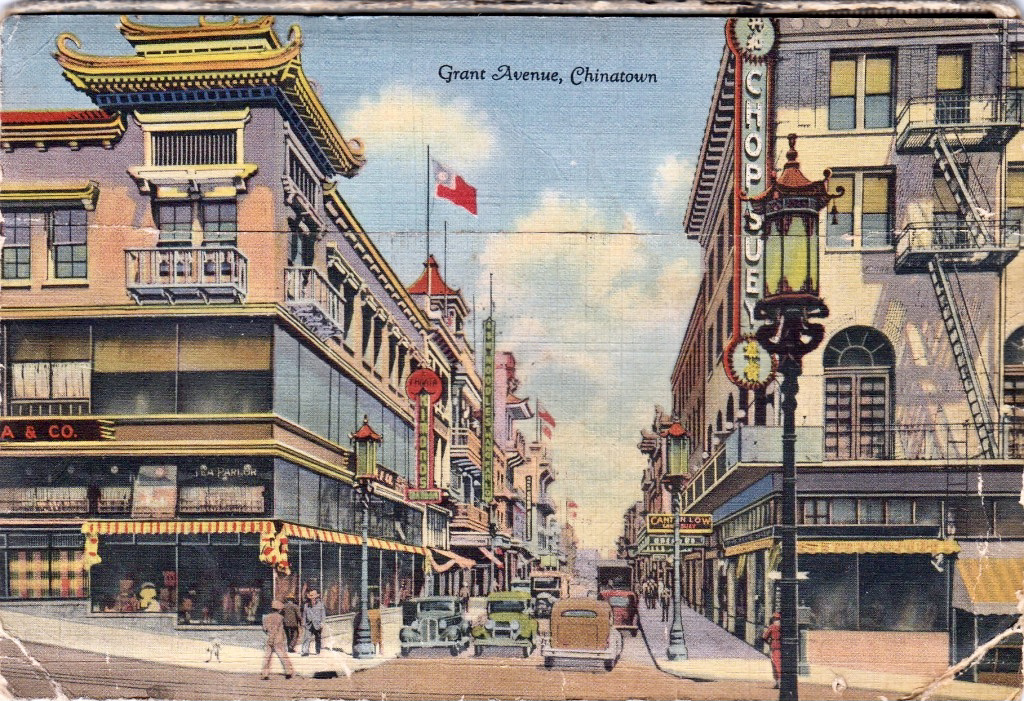
- Under One Sun Part 2: The Chinese Folk Dance Association – A Deeper Dive with Shannon Yip(c) 2026 Copyright Not Fade Away | Interview and Edits by Gabrielle Hrung In this interview, Shannon Yip elaborated on her experiences as the program director of the Chinese Folk Dance Association in the San Francisco Bay area and contextualized the role of education and cultural heritage for Chinese Americans. This interview was held over… Read more: Under One Sun Part 2: The Chinese Folk Dance Association – A Deeper Dive with Shannon Yip
- A Conversation with Richard Aston, author of “Views From Gold Mountain: Voices, History, Memory”
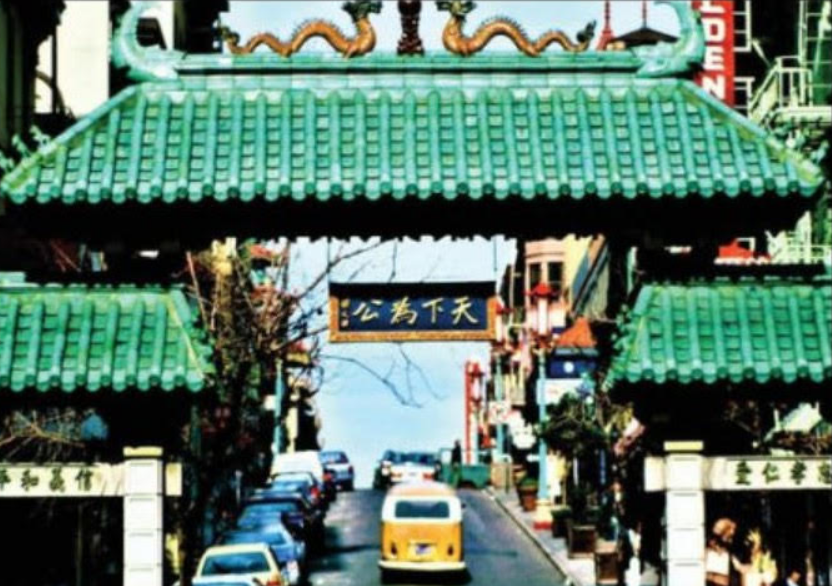 Steve Yip undertook this conversation in 2022 with Richard Aston, the author of Views From Gold Mountain. In this conversation, Aston shares his introduction to the Chinese community of San Francisco, his friendship with the late Him Mark Lai, and reveals some nuggets about the early progressive movement in the Chinese community.
 - George Woo: Rocking the House, Giving Voice to the Voiceless
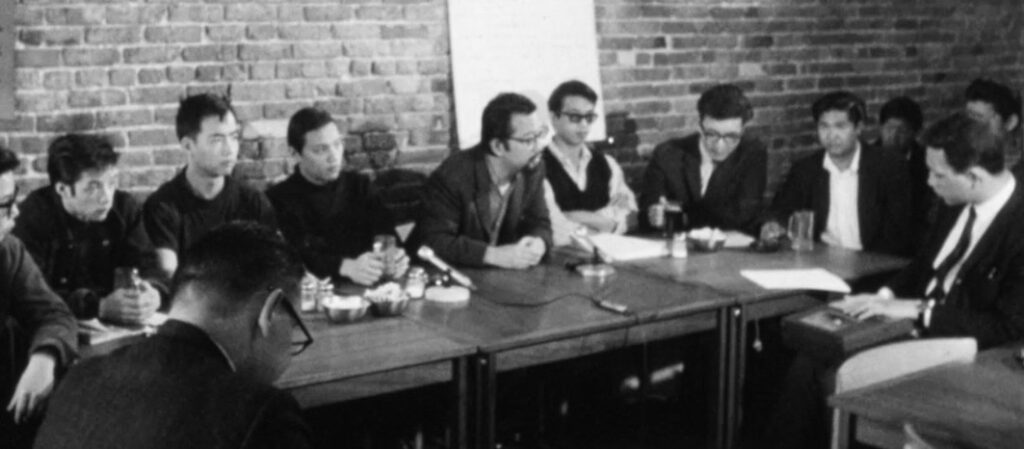 1965 — the calm and complacent facade of the Chinatown community was forever blown open through no-nonsense, jaw-dropping exposures about the Chinatown community. The culprit was one George Woo, a spokesperson for the Wah Ching, a Chinatown street organization composed primarily of disaffected Hong Kong immigrants.
 - Transforming Oakland Public Schools Through Bilingual Education – An Educator’s Reflections
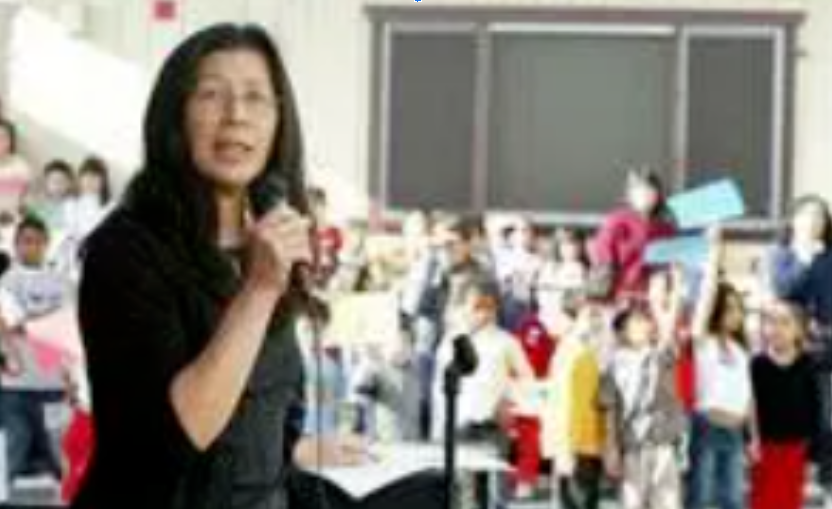 Shannon Yip — passionate practitioner of Chinese folk dance — shares her tenure as a retired Oakland CA, educator and advocate for bilingual/bicultural education and surmounting policy and cultural challenges.
 - Under One Sun Part 1: Chinese Folk Dance in the Diaspora
 In this Part 2 interview, Shannon Yip dives into her journey as a passionate practitioner, dancer, and promoter of Chinese folk dance through the Chinese Folk Dance Association of San Francisco. As the program director, she helped to expose dance students to other cultural communities while promoting Chinese cultural diversity.